Healthy with medicinal herbs from the mountains
Master florist and herbal educator Rosi Walder in an interview
.jpg)
Master Florist and Herbal Educator Rosi Walder in an Interview
Rosi Walder has devoted herself entirely to the cultivation of organic herbs at the Fronigerhof in St. Leonhard in Passeier Valley. Since 2014, the trained florist has turned her former hobby into her full-time profession. She shares her herbal knowledge on hikes with Jägerhof guests and soon also in a book.
The Passeier Valley is perfectly suited for growing organic herbs. There is neither intensive fruit nor wine cultivation here, the soil is uncontaminated, and the air is pure. Rosi Walder grew up with herbal knowledge, which has been passed down in her family for at least six generations. The impetus to turn her love of herbs into a profession came from Jägerhof hotelier Siegi Augscheller.
Hello Rosi, how did you acquire your herbal knowledge?
In Passeier Valley, and especially in my family, knowledge about the healing power and effects of local herbs was initially nothing special. Here in the mountains, we had to help ourselves. Up until the 1970s, using herbs was completely normal—not just for treating ailments but also for daily meals. My grandmother and mother sent me out to gather dandelions, and in winter we collected watercress and chickweed so that there was always something fresh in the kitchen. I continue this tradition, and my children say: “Mom goes shopping in the forest and meadow.”
But you shouldn’t overdo it—a handful of wild herbs per day is enough for one person to support the body. You could say we always acted according to Hippocrates, who taught that our food should be our medicine.
What role did Siegi Augscheller play in your career as an herbal expert?
I used to work full-time in a nursery, and I knew Siegi from the flower shop. Back then, I grew herbs as a hobby at home. Siegi came up with the idea that I could lead herb walks with his guests and started using products I made in his hotel. Today, many regular guests look forward to the weekly herb walk! For the Jägerhof, I developed a special herbal tea blend, which guests take with them on their hikes.
Which herbs do you recommend in spring and why?
In spring, herbs that stimulate and support the body’s detoxification grow. The liver begins to work harder in spring to detoxify the winter-weary body. Wild herbs are the most natural way to support this process. If you don’t, you get so-called spring fatigue, which is nothing more than a symptom of liver overload. Nature takes care of us humans!
The following herbs boost the immune system and support digestion, lungs, and liver—abdomen and respiratory system are the focus in spring: dandelion, wild garlic, nettle, birch leaves, ground-ivy, goutweed, and violets (sweet violets are more effective than dog violets). You can harvest these herbs fresh from the field and use them in salads, smoothies, pestos, and herb quark, preferably uncooked.
Which spring herbs do you consider the most important?
Nettle is undoubtedly one of the oldest and most important medicinal plants in the Alps and beyond. It contains vitamins, minerals, incredible amounts of iron, trace elements, and many other secondary compounds. Nettle’s active compounds help against rheumatism and gout. This superfood grows right at our doorstep, which is why I love showing guests how to use this valuable plant in the kitchen.
Number two on my spring favorites list is dandelion, one of the earliest spring herbs. Its bitter compounds are healing for the stomach and liver, detoxify the bladder and kidneys, and thus help prevent spring fatigue. I use dandelion flowers for coughs, hoarseness, and sore throats. Collecting herbs itself is very healthy—you’re outdoors in the fresh air and getting sunshine at the same time. Did you know that five minutes of outdoor activity can boost your immune system as much as an entire hour?
Rosi, how many herbs do you have in your repertoire?
In Europe, there are actually around 1,500 edible, flavorful herbs. My family used about 400 different herbs. My grandmother Agnes was a kind of “country doctor,” collecting herbs with us daily. Today, many wild plants are protected by law, so I’ve looked for alternatives that can also be grown in gardens. In my book “The Herbal Knowledge of My Grandmother”, soon to be published by Raetia Verlag, I recommend about 60 different plants for everyday use.
Thank you, Rosi, for the fascinating conversation, and enjoy continuing to work with these wonderful herbs in South Tyrol’s Passeier Valley!
Rosi Walder, The Herbal Knowledge of My Grandmother, Raetia Verlag, ISBN 978-88-7283-727-6
More information on herb walks, workshops, and online shop at www.kraedu.net
Address: Fronigerhof, Karlegg 4 A, 39015 St. Leonhard i. P.
Phone: +39 393 9855123
Come stay with us,
.jpg)
Ein Wintererlebnis für alle Sinne
.jpg)
Great cuisine starts with a good base – at Hotel Jägerhof in South Tyrol, this means freshly prepared broths every day.
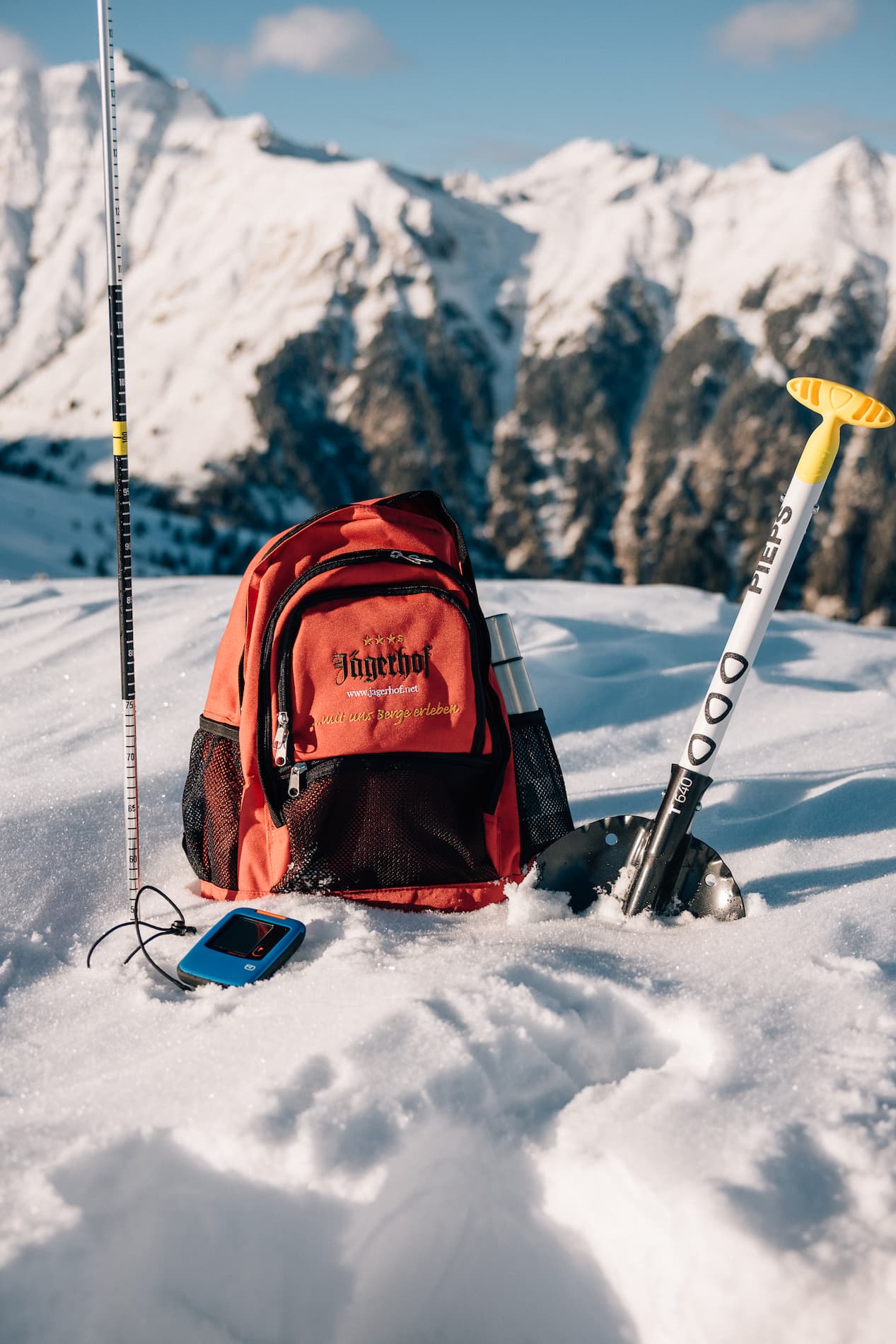
The Right Snowshoe Equipment for Tours Around the Jägerhof