South Tyrolean Dumpling Guide
Siegi’s tips and tricks for the perfect dumplings – how your Semmelknödel will turn out perfectly
.jpg)
Siegi’s Tips and Tricks for the Perfect Dumpling Result
The best accompaniment to a spicy venison goulash, hearty roast pork, or savory cabbage is, of course, a dumpling. Made according to your mood and taste from bread rolls, pretzels, or dark bread, it is truly a delight for the palate. Today, Siegi reveals how to make the perfect bread dumpling.
Siegi and Matthias Augscheller, senior and junior head chefs at Hotel Jägerhof, inherited their dumpling knowledge from their grandmother and great-grandmother. And she probably got her know-how from her grandmother as well. Exactly when the first dumpling was rolled in South Tyrol is impossible to trace. The Augschellers thus look back on a long tradition and know all the “do’s and don’ts” when it comes to the most versatile of side dishes. To make sure that making dumplings at home turns out perfectly, Siegi has summarized his grandmother’s tips. Spoiler: Making dumplings isn’t rocket science, but a bit of intuition and experience certainly helps.
How to Make Your Bread Dumplings Perfectly
In principle, a dumpling recipe is primarily a recommendation. You shouldn’t follow it slavishly, because several factors influence the success of a perfect dumpling. Here are Siegi’s dumpling tips:
- Only use dry bread for preparation, either cut yourself or classic bread cubes from the baker or supermarket. If cutting bread yourself, remember: the older and drier the bread, the more liquid you need to add to the dumpling mixture.
- Keep an eye on the weather or the hygrometer! Grandma’s extra tip: In humid weather, the dumpling mixture needs less moisture; in dry weather, a little more.
- Add as little flour as possible to the dumpling mixture — just enough to bind. Too much flour makes dumplings too compact and firm.
- Let the finished dumpling mixture rest for 15 to 20 minutes. This allows it to bind optimally and makes it easier to shape.
- Adding baking powder is an absolute “no-go”!
- If adding onions and/or bacon, don’t skimp on fat when frying! This keeps the dumplings light.
- After resting, take about 70 to 100 grams of dumpling mixture, press and roll it with wet hands to form a smooth surface. Important: Keep your hands wet — only then will a fine, smooth layer form on the dumpling, preventing it from absorbing water during cooking.
- Before rolling all the dumplings, do a cooking test to check if the dumpling holds together. If it absorbs water and starts to fall apart, add some breadcrumbs. If the test dumpling is too compact, add a little milk.
- How to Cook Dumplings: Bring water to a boil in a large pot, add the rolled dumplings, and reduce the heat. The water should simmer gently. Grandma’s extra tip: Add eggshells to the cooking water — the calcium helps the dumplings stay firm and absorb less water.
- Cooking time for dumplings of the indicated size (70 to 100 grams) is usually ten minutes. Again, a test dumpling helps adjust cooking time for perfect results.
- Tip for dark bread dumplings: Add a small portion of white bread — it binds the mixture more easily, so you won’t need extra flour.
- Making dumplings in advance: Freeze raw (uncooked!) dumplings in a freezer bag. Place the frozen dumplings directly into boiling water — cooking time increases by one-third. Thawed dumplings cook like fresh ones.
The Biggest Mistakes When Making Dumplings
In Siegi’s “Topfgucker” courses, guests often report crumbly, soggy, or hard dumplings. Over the years, Siegi has identified three main mistakes:
- Too much liquid — the dumplings fall apart.
- Bread that is too soft — fresh bread doesn’t absorb liquid as well as dry bread. Rolls, bread, or pretzels should be at least three days old. When in doubt, use bread cubes from the baker.
- Too much heat during cooking — dumplings should only cook in gently simmering water.
His tip: Always cook a test dumpling — then nothing can go wrong.
Want to watch Siegi and Matthias Augscheller make dumplings?
Then book your stay including the “Topfgucker” cooking course at Hotel Jägerhof right away.
Come stay with us,
.jpg)
Ein Wintererlebnis für alle Sinne
.jpg)
Great cuisine starts with a good base – at Hotel Jägerhof in South Tyrol, this means freshly prepared broths every day.
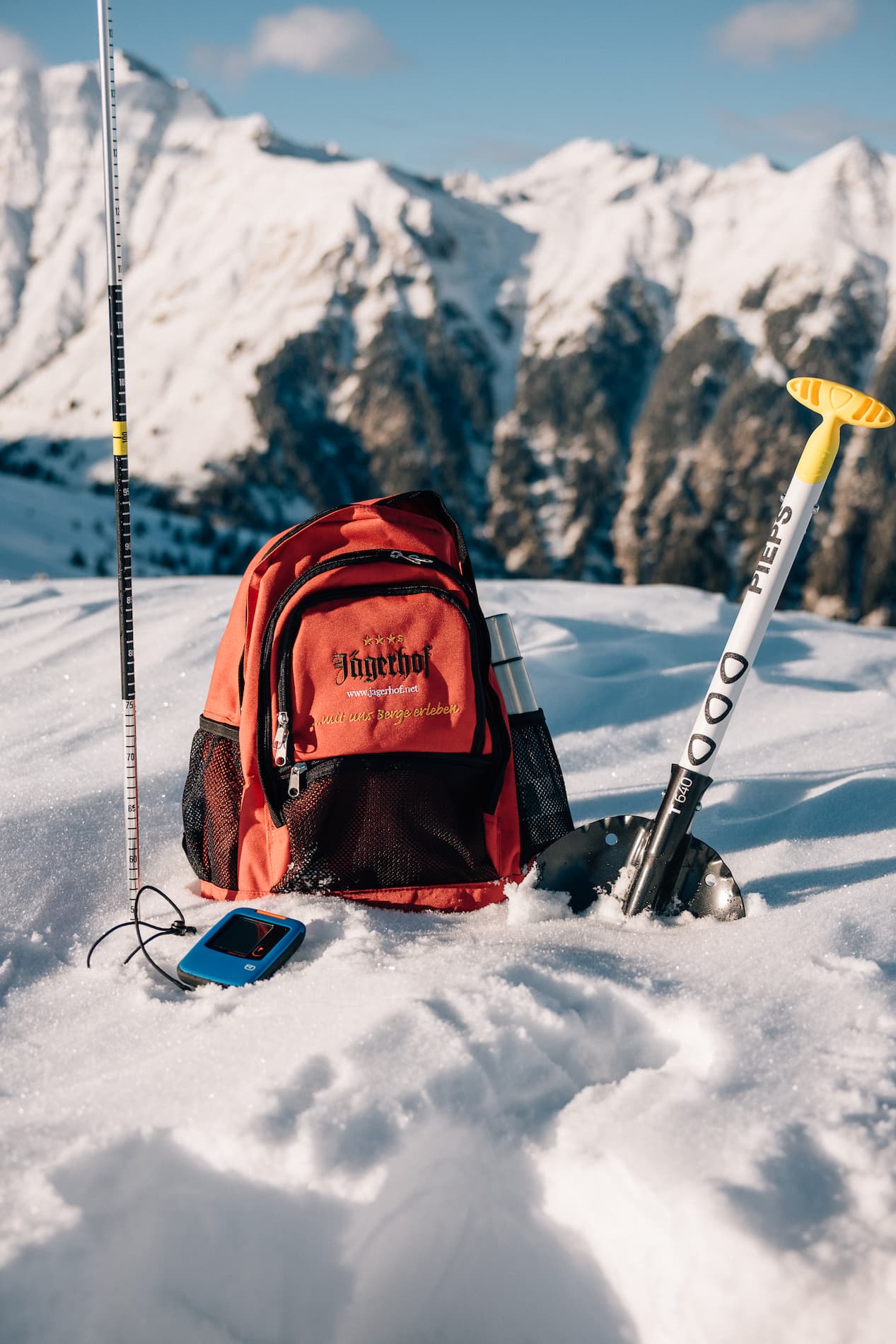
The Right Snowshoe Equipment for Tours Around the Jägerhof